
Stablecoins have become the backbone of DeFi – and for good reason. They offer the best of both worlds: the stability of dollars with the flexibility of crypto. But holding USDC or USDT in a wallet earning nothing is like keeping cash under your mattress while inflation eats away at its value.
The opportunity cost of idle stablecoins is real. With yields ranging from 3% to over 15% depending on your strategy and risk tolerance, your stablecoins could be working hard for you instead of sitting dormant.
Here are five stablecoin yield strategies, ranked by risk and complexity – from beginner-friendly lending to advanced leveraged positions.
Strategy 1: Simple Lending
The most straightforward way to earn yield on stablecoins is direct lending through established protocols like Aave, Compound, or Morpho.
How It Works
When you supply USDC or USDT to a lending protocol, your funds enter a liquidity pool that borrowers can tap into. Borrowers pay interest on their loans, and that interest gets distributed to lenders like you – proportional to your share of the pool.
The process is simple:
- Connect your wallet to a lending protocol
- Select the stablecoin you want to supply
- Approve and deposit your funds
- Start earning interest immediately
Your funds remain accessible – you can withdraw anytime, though very high utilization periods may temporarily limit withdrawals.
Expected Returns
Simple lending typically yields 3-8% APY on major stablecoins, depending on market conditions and the specific protocol. Rates fluctuate based on borrowing demand – bull markets tend to push rates higher as traders leverage up.
Risk Level: Low
This is the safest yield strategy for stablecoins. Your main risks are smart contract vulnerabilities (mitigated by using audited, battle-tested protocols) and temporary liquidity constraints during high utilization.
Best For: Beginners
If you're new to DeFi or prefer a hands-off approach, simple lending is an excellent starting point. It requires minimal monitoring and no active management. You can explore lending opportunities across protocols at Superlend.
Strategy 2: Protocol Hopping
For those willing to be more active, protocol hopping involves regularly moving your stablecoins between protocols to capture the best available rates.
How It Works
Lending rates vary significantly across protocols – and they change constantly. By monitoring rates across multiple platforms and moving your funds to wherever rates are highest, you can potentially earn more than passive lenders who stay in one place.
A typical workflow:
- Track rates across 5-10 lending protocols
- Identify when a meaningful rate differential exists
- Withdraw from your current protocol
- Deposit into the higher-yielding option
- Repeat when conditions change
Key Considerations
Gas costs matter. On Ethereum mainnet, a withdraw-and-deposit cycle might cost $20-50 in gas. You need enough capital for the rate improvement to outweigh transaction costs. Moving $1,000 for a 2% rate bump takes months to break even on gas.
Timing is tricky. By the time you notice a spike and move funds, rates often normalize as other arbitrageurs do the same thing. The highest rates rarely persist.
Tax implications. Frequent moves may create taxable events depending on your jurisdiction – consult a tax professional.
Expected Returns
Active protocol hoppers might add 1-3% additional yield compared to passive lending, but this varies widely based on execution and market conditions.
Risk Level: Low to Moderate
The underlying risk is similar to simple lending, but you're exposed to more transactions (each a potential point of failure) and the risk of chasing rates that don't materialize.
Best For: Active Managers
If you enjoy monitoring markets and have enough capital to justify gas costs, protocol hopping can be rewarding. Tools like Superlend make rate comparison across 350+ markets easier.
Strategy 3: Multi-Chain Diversification
Spreading your stablecoins across multiple blockchain networks can capture higher yields while reducing single-chain risk.
How It Works
The same protocol often offers different rates on different chains. Newer chains or those trying to attract liquidity frequently offer significantly higher rates than established networks like Ethereum mainnet.
For example:
- USDC lending on Ethereum mainnet might yield 4%
- The same protocol on Arbitrum might offer 6%
- A newer chain with incentive programs might offer 10%+
By diversifying across chains, you capture these opportunities while spreading risk.
The Bridge Factor
Moving between chains requires using bridges – and this introduces a distinct risk category. Bridge exploits have caused billions in losses across DeFi. To manage this:
- Use established, audited bridges
- Avoid moving large sums through newer bridges
- Consider the bridge itself as part of your risk budget
- Some chains have native on/off ramps that bypass bridges entirely
Expected Returns
Multi-chain strategies can yield 5-12% APY on stablecoins, with higher-incentivized chains offering more (but with proportionally higher risk).
Risk Level: Moderate
Beyond smart contract risk, you're adding bridge risk and the operational complexity of managing positions across multiple networks. Chain-specific risks (like sequencer downtime on L2s) also apply.
Best For: Intermediate Users
If you're comfortable with basic DeFi operations and understand bridge risks, multi-chain diversification offers a good balance of enhanced yield and manageable complexity. Start with established L2s like Arbitrum or Base before exploring newer chains.
Strategy 4: Yield Aggregators
Why manage everything yourself when smart contracts can do it for you? Yield aggregators automate the process of finding and capturing the best stablecoin yields.
How SuperFund Works
SuperFund is Superlend's automated yield optimization vault for stablecoins. When you deposit USDC or USDT into SuperFund, the protocol automatically:
- Deploys your capital across multiple lending opportunities
- Monitors rates continuously
- Rebalances positions to capture better yields
- Compounds earnings back into your position
You deposit once and let the automation handle the rest.
Benefits of Automation
Gas efficiency. By pooling user funds, aggregators spread gas costs across all participants. A rebalance that would cost you $30 individually might cost pennies per user in a large vault.
24/7 optimization. Algorithms don't sleep. They can capture fleeting opportunities and rebalance positions around the clock.
Professional management. Vault strategies are typically designed by teams with deep DeFi expertise, implementing tactics individual users might not think of.
Simplicity. One deposit, one position to track, automatic compounding.
Understanding Yield Smearing
Most sophisticated vaults use yield smearing – releasing earnings gradually over several days rather than all at once. This creates smoother, more predictable returns and protects against certain exploits. New depositors should understand that their personal APY may start lower and ramp up over the first week.
Expected Returns
Well-managed yield aggregators typically deliver 5-10% APY on stablecoins, often outperforming manual strategies after accounting for gas costs and missed opportunities.
Risk Level: Low to Moderate
You're trusting the aggregator's smart contracts and strategy. Use established, audited vaults with transparent strategies. SuperFund undergoes regular audits and operates with conservative risk parameters.
Best For: Most Users
Unless you have a specific reason to manage positions manually, yield aggregators offer better risk-adjusted returns for most stablecoin holders. Deposit into SuperFund to start earning optimized yields automatically.
Strategy 5: Leveraged Yield (Advanced)
For experienced users seeking maximum returns, leveraged yield strategies – also known as looping – can significantly amplify stablecoin yields.
Looping Explained
The basic concept:
- Supply USDC as collateral to a lending protocol
- Borrow more USDC against that collateral
- Supply the borrowed USDC as additional collateral
- Repeat the process multiple times
Each loop increases your effective exposure to the lending rate. If lending yields 5% and you can safely leverage 3x, your effective yield approaches 15% – minus borrowing costs.
Risk Amplification
Here's the critical caveat: leverage amplifies everything – including risks.
- Liquidation risk: If your health factor drops too low (due to rate changes, protocol updates, or other factors), your position can be liquidated
- Rate volatility: If borrow rates spike above lending rates, leveraged positions can become unprofitable quickly
- Complexity: Managing leveraged positions requires active monitoring and understanding of liquidation mechanics
- Gas costs: Building and unwinding loops requires multiple transactions
Loop Vaults on Superlend
Superlend Loop Vaults simplify leveraged yield strategies by automating the looping process. You choose your desired leverage level, and the vault handles execution, management, and unwinding.
Key features:
- One-click loop creation
- Automated health factor management
- Simplified position tracking
- Easy unwinding when you want to exit
Even with automation, leveraged positions require understanding the risks. Loop Vaults make execution easier, but they don't eliminate the fundamental risks of leverage.
Expected Returns
Leveraged stablecoin strategies can yield 10-20%+ APY, depending on market conditions and leverage levels. Higher leverage means higher potential returns – and higher risk.
Risk Level: High
This is not a beginner strategy. You can lose a meaningful portion of your position to liquidation if rates move against you or you don't monitor your health factor. Only use funds you can afford to lose.
Best For: Experienced Users Only
If you understand liquidation mechanics, health factors, and rate dynamics, and you're comfortable with active position management, Loop Vaults offer powerful yield enhancement. Start with conservative leverage (2x) before considering higher levels.
Comparing Strategies
Here's how the five strategies stack up:
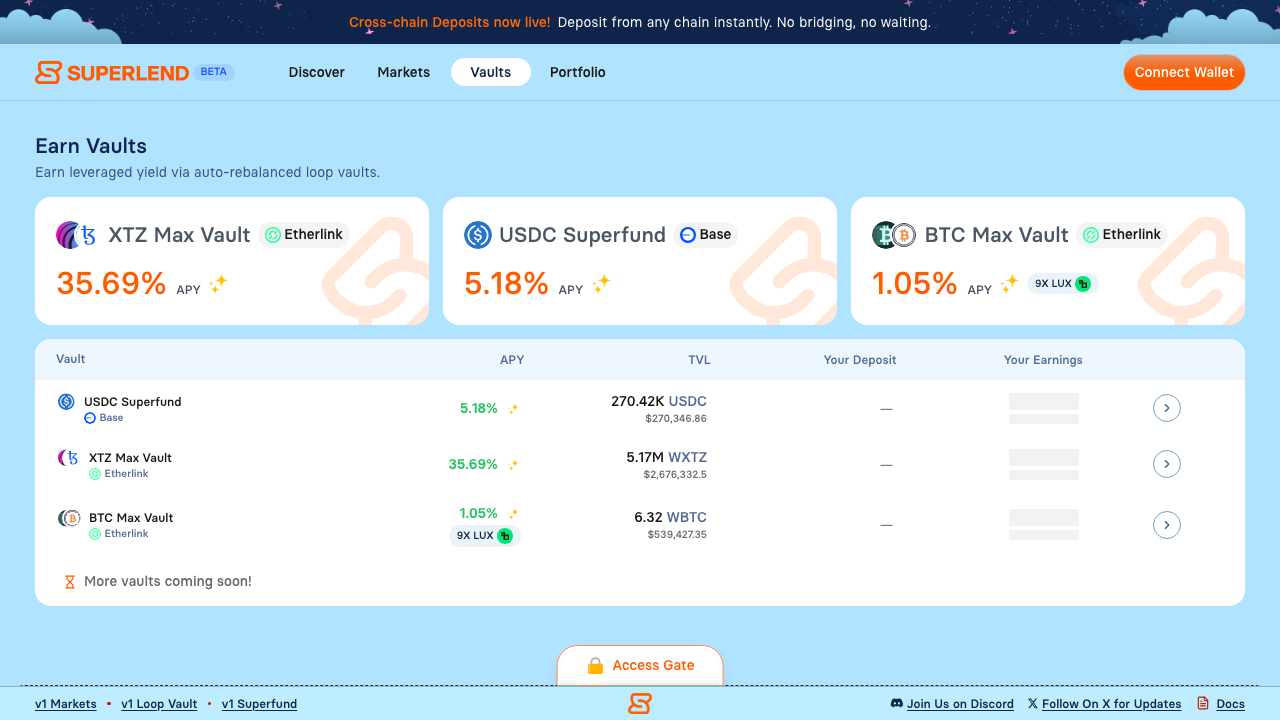 Explore yield strategies in the Vaults section on Superlend
Which Strategy Should You Choose?
If you're new to DeFi: Start with simple lending or a yield aggregator like SuperFund. Learn how the ecosystem works before taking on additional complexity.
If you want hands-off optimization: Yield aggregators are designed for you. Deposit and let automation handle the rest.
If you enjoy active management: Protocol hopping or multi-chain strategies let you capture opportunities through active participation.
If you're experienced and seeking maximum yield: Leveraged strategies through Loop Vaults can amplify returns – but only if you understand and accept the additional risks.
Tips for Maximizing Stablecoin Yield
Regardless of which strategy you choose, these principles apply:
Monitor Gas Costs
Every transaction has a cost. On Ethereum mainnet, frequent small moves can eat your yield entirely. Calculate your break-even point before switching protocols. L2s like Arbitrum and Base offer dramatically lower gas costs for active strategies.
Consider Tax Implications
In many jurisdictions, every swap, deposit, and withdrawal may be a taxable event. Keep records and consult a tax professional. The highest yield isn't worth it if you're creating a tax nightmare.
Diversify Across Protocols
Don't put all your stablecoins in one protocol. Smart contract risk is real – even audited protocols have been exploited. Spreading across 2-3 reputable protocols reduces your exposure to any single point of failure.
Don't Chase Unsustainable Rates
If a yield looks too good to be true, it probably is. Extremely high rates are often temporary (incentive programs) or indicate hidden risks. Sustainable stablecoin yields typically range from 3-12% – anything significantly higher deserves extra scrutiny.
Understand What You're Using
Before depositing, understand how the protocol works, who's behind it, and what audits it has undergone. Taking 30 minutes to research could save you from a costly mistake.
Frequently Asked Questions
Q: Are stablecoin yields sustainable, or will they go to zero?
Stablecoin yields exist because borrowers pay interest to use your capital. As long as there's demand to borrow stablecoins – for trading, leverage, or other purposes – yields will exist. The specific rates fluctuate with market conditions, but the fundamental demand for stablecoin borrowing has persisted throughout DeFi's history.
Q: Which stablecoin should I use – USDC or USDT?
Both work well for yield strategies. USDC is generally considered more transparent and regulatory-compliant, while USDT has deeper liquidity in some markets. Many users hold both. The key is using stablecoins issued by reputable entities with clear reserves. For a deeper dive, check out our USDC Lending Guide.
Q: How much should I start with?
There's no minimum, but gas costs matter. On Ethereum mainnet, starting with at least $1,000 makes sense for simple strategies; active strategies need more. On L2s with lower gas costs, you can start with smaller amounts. Begin with an amount you're comfortable learning with.
Start Earning on Your Stablecoins
Idle stablecoins are a missed opportunity. Whether you choose simple lending, automated vaults, or advanced leveraged strategies, your USDC and USDT can work harder for you.
Ready to get started?
- Compare lending rates across 350+ markets at Superlend
- Deposit into automated yield optimization in the Vaults section
- Explore leveraged strategies in Loop Vaults
For a comprehensive understanding of DeFi lending fundamentals, read our Complete Guide to DeFi Lending.
This article is for educational purposes only and does not constitute financial advice. DeFi involves risks including smart contract vulnerabilities, market volatility, and potential loss of funds. Rates are variable and subject to change. Past performance does not guarantee future results. Always conduct your own research before making investment decisions, and only invest what you can afford to lose.