February 2026 DeFi yields remain strong, with stablecoin rates between 3-9% APY, ETH at 1.5-2% APY for native lending, and BTC yields under 0.1% APY. Synthetic dollar assets like sUSDe are leading the pack with yields approaching 9%, while traditional stablecoins like USDC and USDT offer more modest but consistent returns in the 3-5% range.
Market dynamics this month show continued demand for synthetic stablecoins and newer assets like RLUSD and PYUSD, which are commanding premium rates on protocols like Euler v2 and Aave. Meanwhile, the main USDC and USDT markets on Aave v3 Ethereum hold over $10B in combined deposits, reflecting strong confidence in established markets.
Superlend is a non-custodial DeFi lending aggregator that compares rates across 350+ markets on 11+ chains, making it straightforward to find where your assets can earn the most.
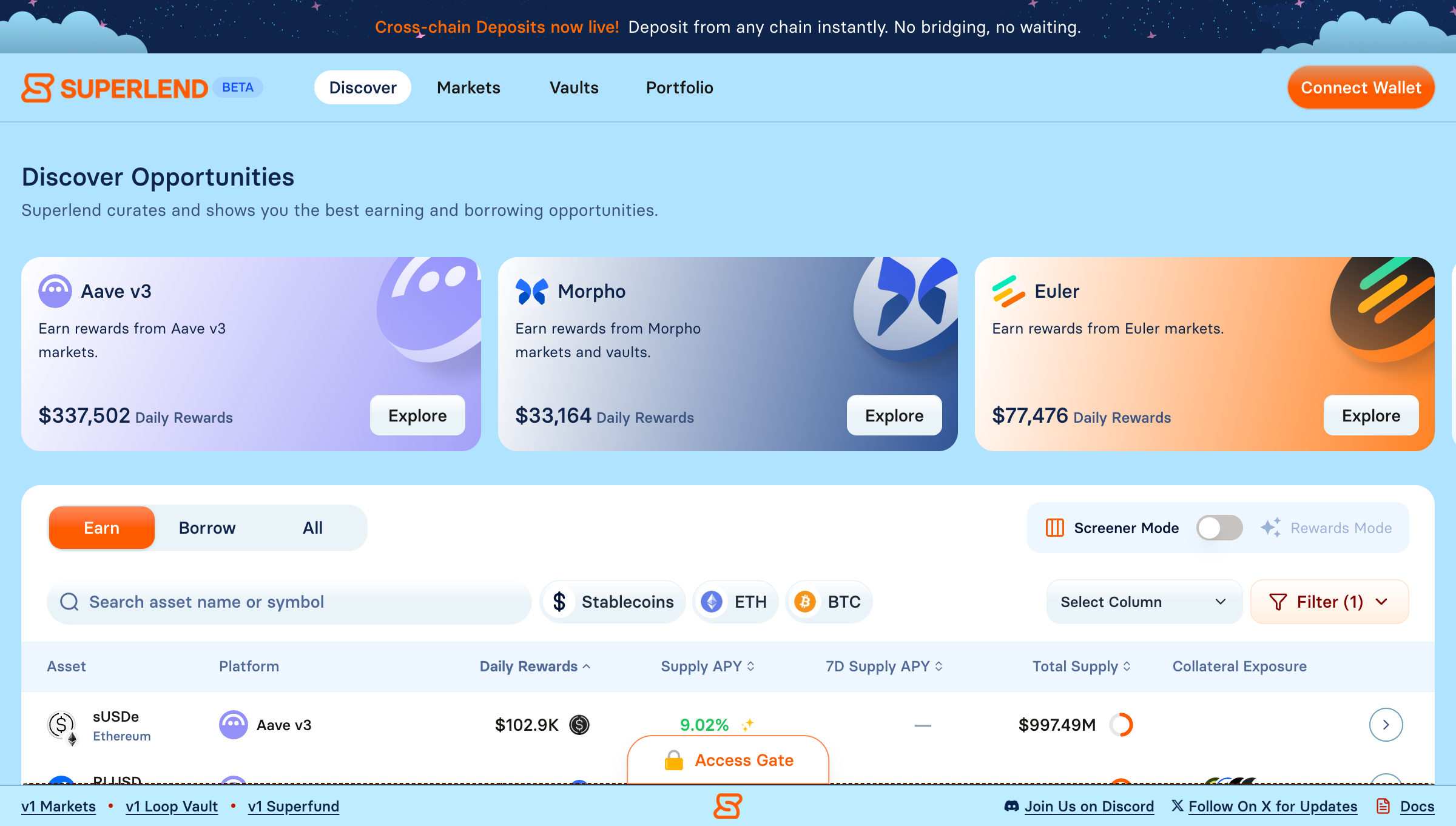 Superlend's Discover page aggregates yield opportunities across protocols and chains.
Stablecoin DeFi Yields: February 2026
Stablecoins continue to offer the most attractive DeFi yields for lending. The spread between different stablecoin types has widened this month, with synthetic dollars significantly outperforming traditional fiat-backed stablecoins.
USDC Rates
USDC remains the most liquid stablecoin in DeFi with over $4B deposited on Aave v3 Ethereum alone. Current rates range from approximately 2.5% to 5% APY depending on the protocol and chain. For strategies to maximize your USDC returns, see our USDC lending guide.
Key USDC opportunities this month:
- Morpho vaults on Base and Ethereum offer rates in the 3.5-5% range
- Aave v3 on Base shows slightly higher rates than Ethereum mainnet
- Fluid's USDC market provides competitive rates around 4.7% APY
USDT Rates
Tether (USDT) rates are tracking slightly below USDC, with the main Aave v3 Ethereum market showing around 2.6% APY on $6.5B in deposits. Fluid offers better USDT rates at approximately 4.4% APY for those willing to use a newer protocol.
Newer Stablecoins: Where the Yields Are
The highest stablecoin yields this month come from newer assets:
- sUSDe (Ethena's synthetic dollar): 8.5-9% APY on Aave v3
- RLUSD (Ripple's stablecoin): 5.9-7.8% APY across Aave and Euler
- PYUSD (PayPal's stablecoin): 4.9-8.2% APY on Aave and Euler
These premium rates reflect lower liquidity and higher borrowing demand for these newer assets. The trade-off is that these markets are smaller and the assets themselves have shorter track records.
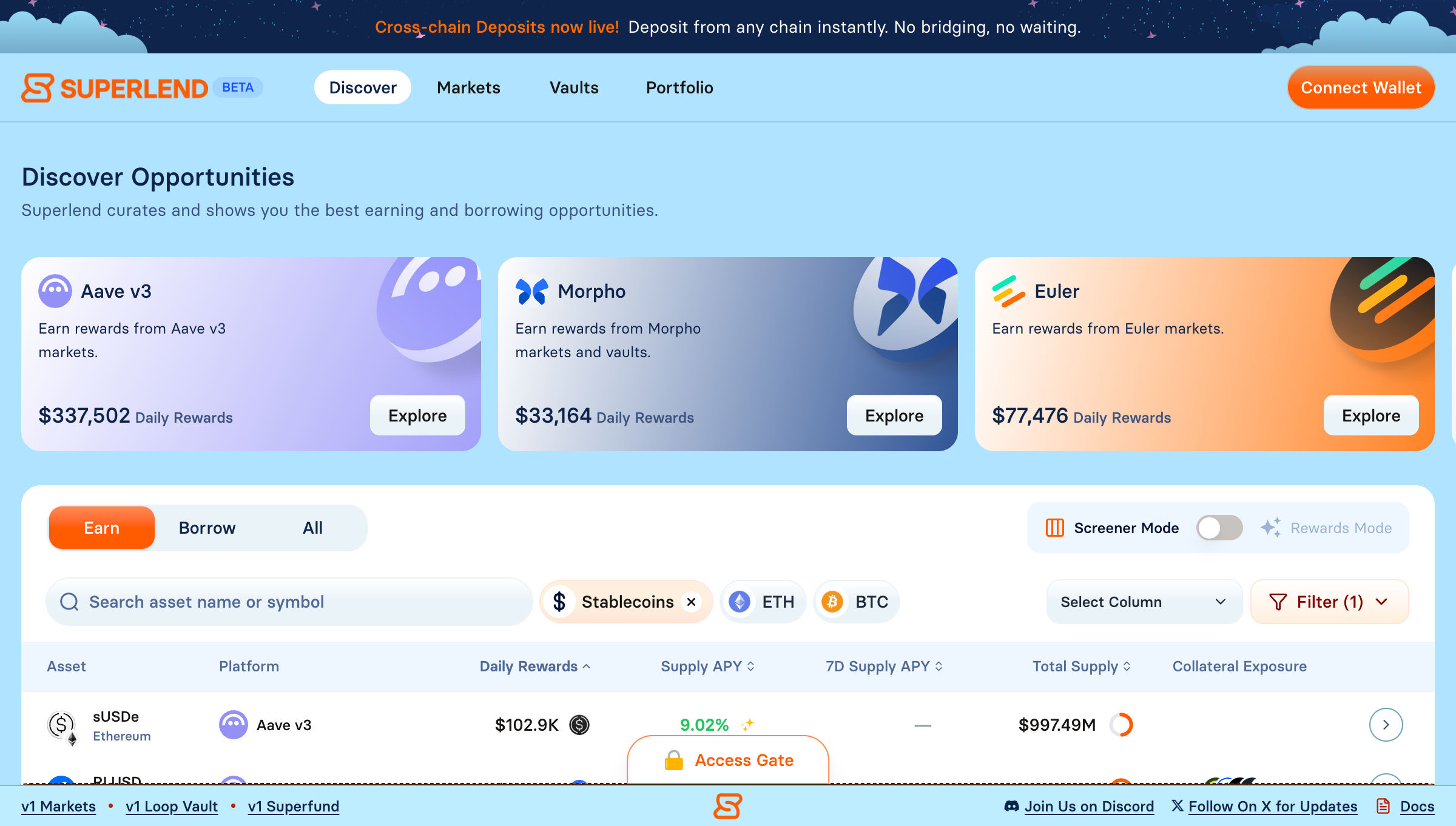 Stablecoin yields on Superlend showing sUSDe, RLUSD, and other opportunities.
What's Driving Stablecoin DeFi Yields This Month?
Several factors explain the current rate environment:
- Synthetic dollar demand: sUSDe borrowing remains elevated as traders use it for various strategies
- New asset adoption: RLUSD and PYUSD are seeing increased borrowing as more protocols integrate them
- Base chain growth: Layer 2 activity on Base is driving competitive stablecoin rates
- Stable market conditions: Neither a strong bull nor bear market, keeping borrowing demand consistent
ETH Lending Rates: February 2026
ETH lending yields have compressed this month, with native ETH/WETH rates hovering around 1.5-1.8% APY. For detailed strategies on ETH lending, see our ETH lending rates guide.
Native ETH Lending
The main WETH markets show modest but stable returns:
- Aave v3 Ethereum: ~1.65% APY on $8.2B in deposits
- Aave v3 Arbitrum: ~1.62% APY
- Aave v3 Base: ~1.47% APY
- Fluid: ~1.78% APY with lower liquidity
These rates reflect the reality that ETH borrowing demand remains limited. Most traders who want ETH exposure simply hold it rather than borrow.
Liquid Staking Token Yields
Liquid staking tokens (LSTs) like wstETH and weETH show minimal lending yields (under 0.1% APY) because their value already accrues staking rewards. However, they serve an important function as collateral for borrowing stablecoins or other assets.
The real opportunity with LSTs is combining staking rewards (~3-4% from Ethereum's proof-of-stake) with DeFi strategies. Simply holding wstETH or weETH earns staking yield without any additional action.
Considerations for ETH Lending
When evaluating ETH lending opportunities:
- Compare total cost: On Ethereum mainnet, a single deposit transaction can cost $5-20 in gas. Make sure your position size justifies the costs
- Consider LSTs: If you just want yield on ETH, liquid staking may offer better returns than lending
- Watch utilization: Low utilization means rates are unlikely to improve significantly
BTC/WBTC Lending: February 2026
Bitcoin lending in DeFi continues to offer minimal yields, with rates under 0.1% APY across most markets. For more context on Bitcoin lending, see our WBTC lending guide.
WBTC Lending Rates
Current BTC-related lending rates:
- WBTC on Aave v3 Ethereum: ~0.01% APY on $3.3B deposits
- cbBTC on Aave v3 Base: ~0.06% APY
- cbBTC on Aave v3 Ethereum: ~0.01% APY on $1.7B deposits
These rates are essentially zero for practical purposes. The BTC markets primarily exist to provide collateral for borrowers, not to generate yield for lenders.
Where to Find Best BTC Yields
Frankly, DeFi lending is not the place to earn yield on Bitcoin. The borrowing demand simply is not there. BTC holders looking for yield might consider:
- CeFi platforms (with appropriate trust considerations)
- BTC-denominated DeFi strategies on other networks
- Simply holding BTC if yield is not a priority
Risk Considerations
If you do lend BTC in DeFi:
- Wrapper risk: WBTC is backed by custodians. cbBTC is backed by Coinbase. Understand the trust assumptions
- Opportunity cost: Near-zero yields mean your BTC is locked with minimal benefit
- Use as collateral instead: BTC's main DeFi utility is as collateral for borrowing, not earning yield
Top Protocols for Yield: February 2026
Here's how the major lending protocols compare this month.
Aave
Aave v3 dominates DeFi lending with the largest markets and deepest liquidity. Key stats:
- Over $25B in total value locked
- Present on Ethereum, Arbitrum, Base, Optimism, Avalanche, and more
- Main USDC market: $4.1B deposits, ~3.7% APY
- Main USDT market: $6.5B deposits, ~2.6% APY
- Main WETH market: $8.2B deposits, ~1.6% APY
Aave's size means reliable withdrawals even during market stress. The trade-off is that rates tend to be moderate rather than market-leading.
Morpho
Morpho continues to optimize yields by matching lenders and borrowers more efficiently:
- Multiple curated vaults with different risk profiles
- Gauntlet, Steakhouse, and other vault managers optimize allocations
- USDC vaults showing 3.5-5% APY
- Built on top of Aave and Compound infrastructure
Morpho Vaults often deliver higher yields than base Aave/Compound rates through professional curation and optimized capital allocation across Morpho Blue markets.
Euler v2
Euler v2 has emerged as a destination for newer stablecoin yields:
- PYUSD markets with 8%+ APY
- RLUSD markets with 7-8% APY
- Permissionless market creation allows faster asset support
- Smaller TVL means higher rates but also higher risk
Euler v2 appeals to yield-seekers willing to use newer assets and smaller markets.
Fluid
Fluid offers competitive rates on select assets:
- USDC: ~4.7% APY
- USDT: ~4.4% APY
- ETH: ~1.8% APY
Fluid is newer with less TVL, but rates are consistently above Aave on comparable assets.
How to Find the Best Rates
Rates change constantly as supply and demand shift across protocols. Here is how to stay on top of opportunities.
Using Superlend to Compare Markets
Superlend's Discover page shows real-time rates across 350+ markets. You can:
- Filter by asset type (stablecoins, ETH, BTC)
- Sort by Supply APY to find the highest rates
- Compare 7-day average rates to spot consistent opportunities
- See total supply to gauge market depth
This beats checking Aave, Compound, Morpho, and Euler v2 individually.
Beyond APY: What Else to Consider
APY (Annual Percentage Yield) represents the annualized return on your deposit, assuming rates stay constant. But rates fluctuate daily, so the APY you see today may not persist.
When evaluating opportunities, also consider:
- 7-day average APY: More stable indicator than current spot rate
- Total supply: Larger markets generally mean more reliable rates
- Utilization: Very high utilization (85%+) means higher rates but potential withdrawal delays
- Protocol maturity: Established protocols have longer track records
For more on evaluating DeFi lending safety, see Is DeFi Lending Safe.
SuperFund: Automated Yield Optimization
For those who prefer passive yield generation, SuperFund vaults automate the process of finding and capturing the best rates.
How SuperFund Works
SuperFund vaults:
- Accept stablecoin deposits through a single transaction
- Automatically allocate across multiple lending opportunities
- Rebalance when rate differences justify the gas costs
- Share gas costs across all depositors
This means you can earn optimized yields without monitoring rates daily.
Who It's For
SuperFund fits:
- Stablecoin holders who want yield without active management
- Smaller positions where individual gas costs make rate-chasing impractical
- Users who prefer diversified exposure across multiple protocols
Access SuperFund in the Vaults section on Superlend.
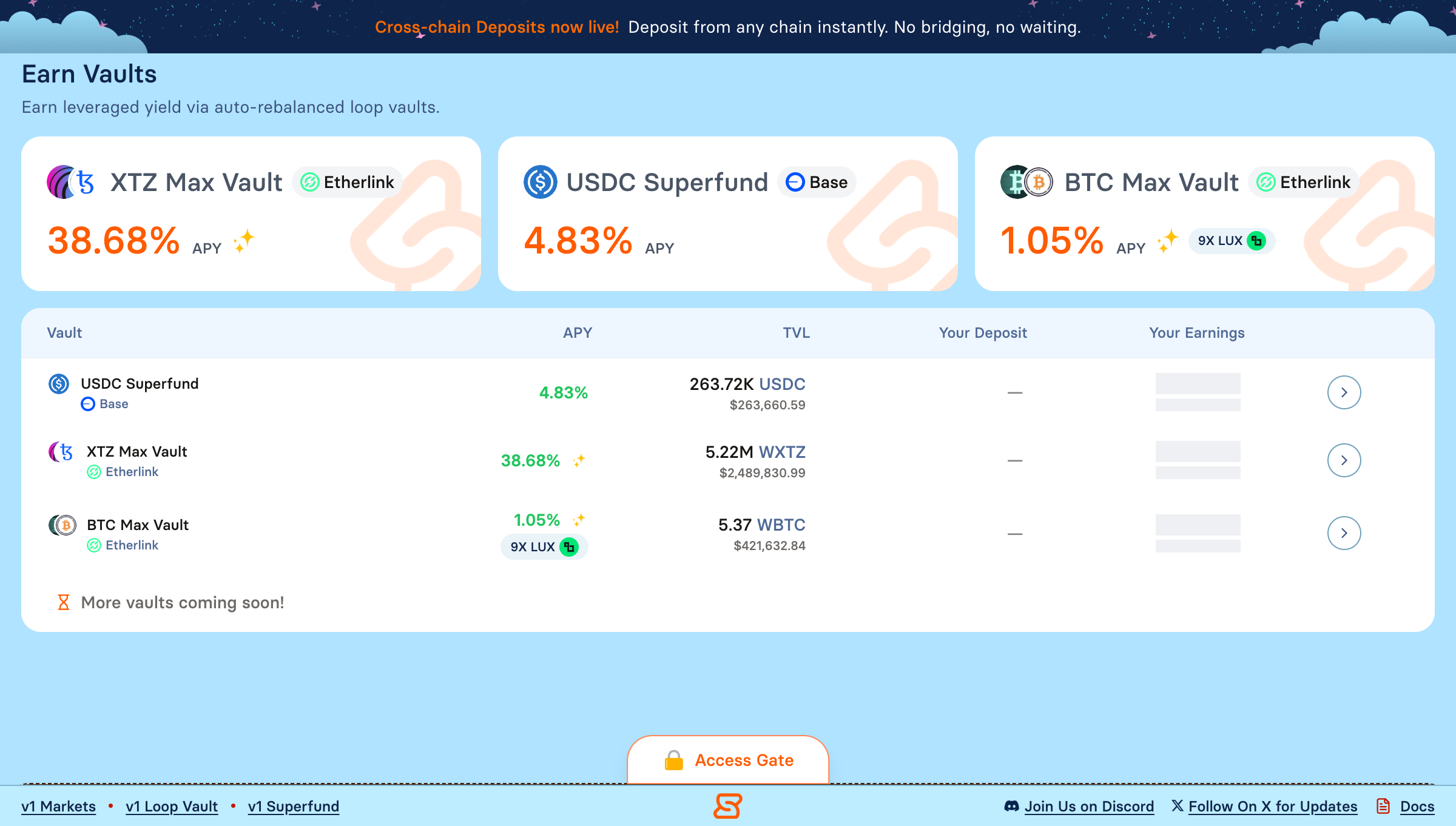 SuperFund and other yield vaults available on Superlend.
Frequently Asked Questions
What stablecoin yields can I realistically expect in February 2026?
Traditional stablecoins like USDC and USDT yield 2.5-5% APY on major protocols. Newer synthetic dollars like sUSDe offer 8-9% APY but come with additional considerations around the underlying mechanics. Sustainable yields in the 3-5% range on established stablecoins represent fair compensation for the risks involved.
Why are ETH and BTC lending rates so low?
Borrowing demand drives lending rates. Most traders who want ETH or BTC exposure simply buy and hold rather than borrow. Stablecoins have high borrowing demand because traders use them for leverage, paying for things, and avoiding volatility. This fundamental demand difference explains the rate spread.
Should I chase the highest yields?
Not necessarily. The highest yields often appear on newer assets, smaller protocols, or higher-risk markets. A 9% yield on a synthetic dollar involves different risks than a 4% yield on USDC in Aave. Match your risk tolerance to the opportunity. Established protocols with moderate yields suit larger positions, while smaller allocations can explore higher-yield opportunities.
Conclusion
February 2026 yields vary significantly by asset and protocol. Stablecoin holders have the most options, with traditional stablecoins earning 3-5% and synthetic dollars reaching 8-9%. ETH lending yields remain modest at 1.5-2%, while BTC lending is essentially zero.
The right strategy depends on your goals and risk tolerance. Superlend makes comparing these opportunities straightforward by aggregating 350+ markets in one interface.
For more background on DeFi lending fundamentals, see our Complete Guide to DeFi Lending. For risk considerations, review Is DeFi Lending Safe.
Rates shown are as of February 2026 and are variable. Past performance does not guarantee future results. This is not financial advice. DeFi involves risks including smart contract vulnerabilities and potential loss of funds. Always conduct your own research before making investment decisions.